

The foundation module is the entry point into the naftali method.
Organized through five stages of water—pool, spring, current, surge, and delta—the module introduces the core principles of the practice while allowing participants to experience them directly through movement.
Rather than teaching a fixed technique, the foundation is structured around a series of inquiries. The stages provide a shared terrain, while the questions invite individual discovery. Through guided improvisation, participants investigate how movement reorganizes when softness becomes the starting condition, and speed is approached as a form of attention rather than force.
The class begins by cultivating awareness of the body's internal landscape before gradually moving toward greater mobility, responsiveness, and momentum. Attention shifts from sensation to action, from arrival to flow, and eventually toward improvisation.
-
Arrival and awareness.
The practice begins standing. Through gentle movement, touch, and breath, participants arrive in the space and their bodies. Attention shifts inward, cultivating awareness of sensation, weight, and the body's internal landscape.
-
Awakening the soft body.
Participants move to standing and begin activating the body's major joints. Through folds, unfolds, spirals, and directional exploration, the joints become supple, responsive, and available for movement.
-
Building momentum.
Movement begins to travel through space. Through an accumulative series of tasks and across-the-floor passages, participants develop a relationship to continuity, responsiveness, and pace.
-
Integration and inquiry.
The module concludes with an open improvisational jam. Material from class, personal discoveries, and emerging questions are given space to unfold, allowing participants to continue their own investigation within the framework of the practice.
As the practice unfolds, participants develop a relationship to softness, speed, and the movement patterns that emerge between them. Questions arise through experience:
How does the body organize effort when softness becomes the starting condition?
What forms of momentum emerge when movement is allowed to circulate rather than be driven?
How does sustained attention reshape timing, clarity, and continuity in improvisation?
What perceptual shifts occur when speed is approached as pace rather than urgency?
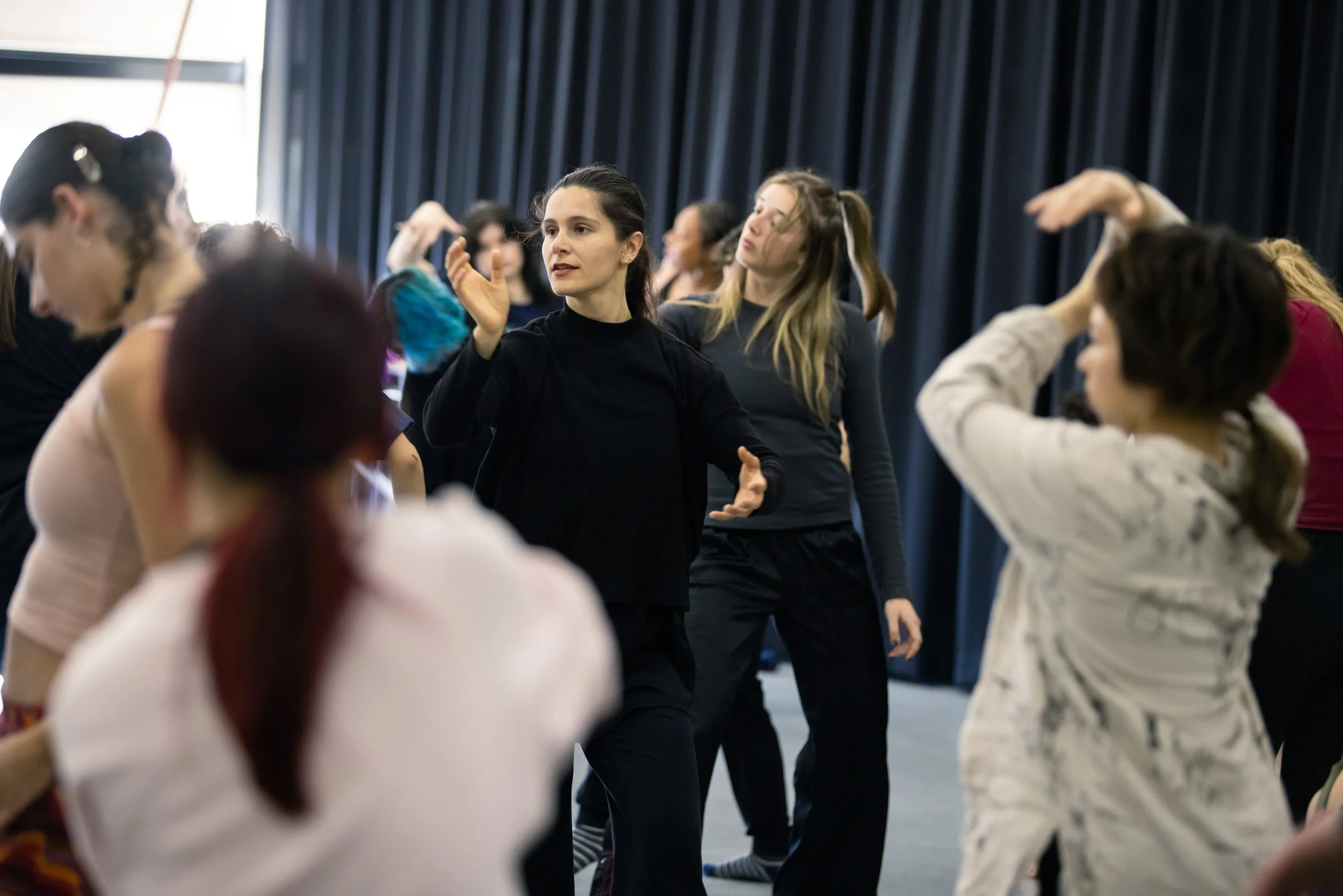
Photography by Allison Joyce.
Photography by Skye Varga
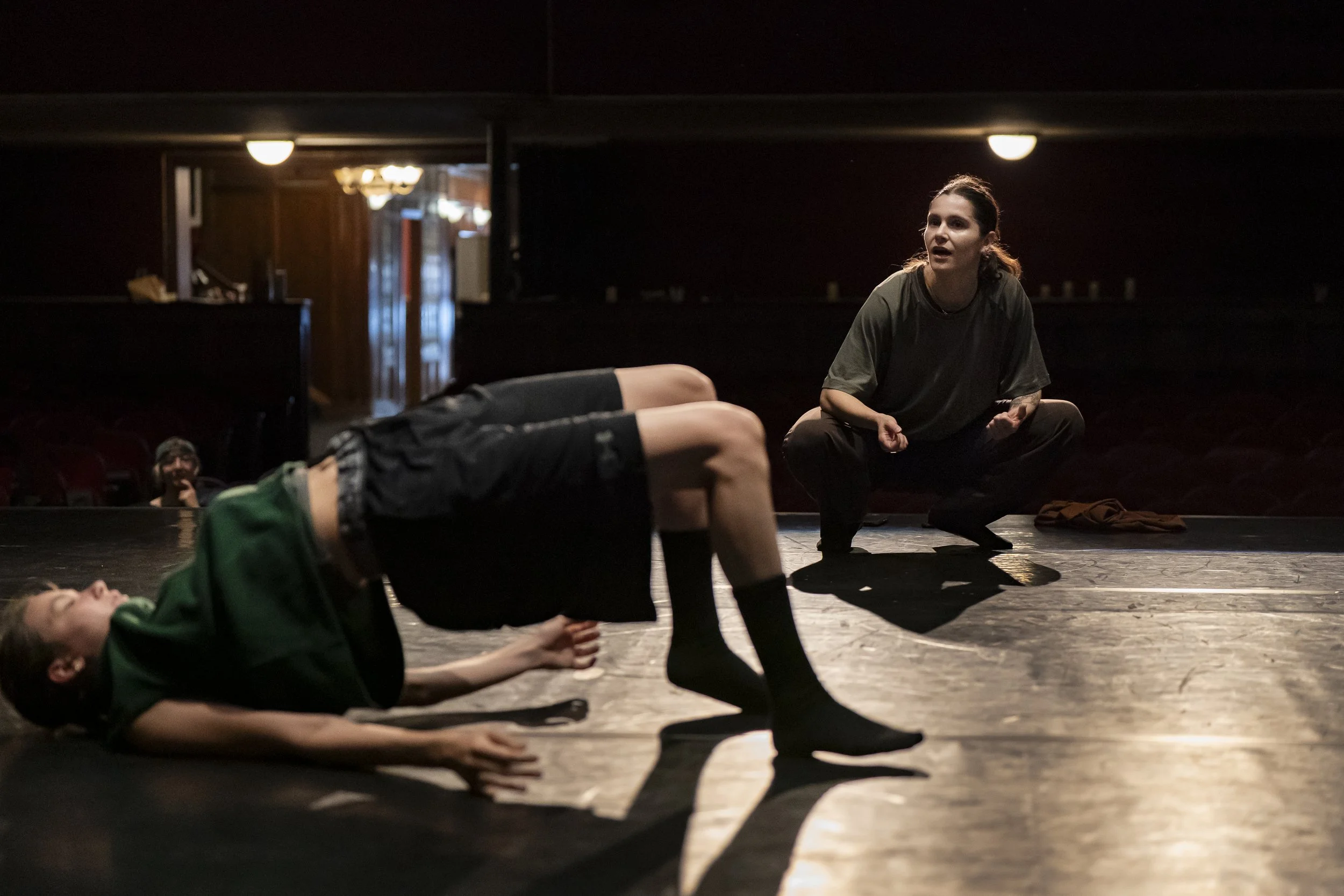
Photography by Allison Joyce.