

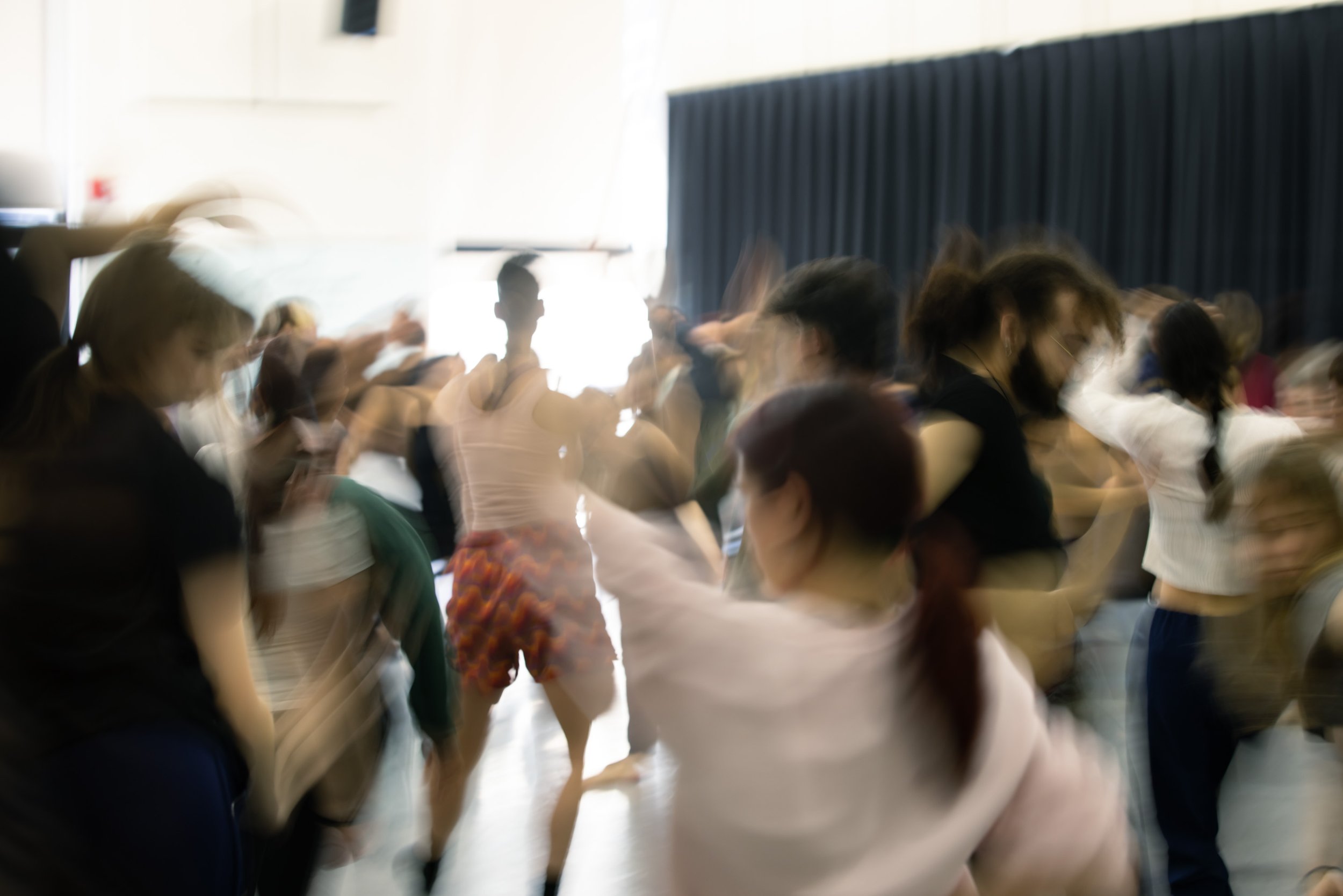
Photography by Skye Varga.
How does the naftali method work?
The naftali method is an improvisational dance practice where softness and speed generate inquiry.
It invites both dancers and non-dancers to explore how movement reorganizes through release, momentum, and circulation. The practice offers a shared framework while allowing individual histories, abilities, and movement languages to shape its unfolding.
At its core, the work moves between two conditions:
softness — a state of release that allows movement to travel with clarity and ease
speed — a form of attention that emerges through responsiveness rather than force
Together, softness and speed shift how effort is organized in the body, opening questions around ease, responsiveness, and clarity. What becomes possible when release is the starting condition? How might speed emerge through attention rather than force? These questions remain open, changing as the practice moves between bodies, contexts, and forms.
The practice unfolds through stages derived from the behavior of water—shaping how attention gathers, moves, and transforms over time. Rather than a fixed system, this structure offers a way of navigating the work as it changes.
The work opens in different directions:
-
The naftali method emerged through an ongoing process of self-directed research beginning in 2020. Through years of training, recording, and observing the body in motion, a recurring quality emerged: a supple body moving swiftly.
The practice was first piloted under the title Soft as a Cat, Quick as a Bird at ConnectArte Espacio Multidisciplinario in Tijuana, Mexico. It continued to evolve through independent research and teaching before being formally named naftali method in 2024 during the San Diego Dance Theatre Intensive.
Today, the work remains an evolving practice, shaped through teaching, collaboration, and ongoing inquiry.
-
The name naftali comes from an ancient poetic blessing describing "a deer let loose, who gives beautiful words." The image of a body that is both swift and expressive became an early point of reference for the practice.
The word method is used intentionally—not to suggest a fixed technique, but an approach to movement. Rather than prescribing specific forms, the practice offers tools, conditions, and inquiries that can be adapted to different bodies and experiences.
The name is written in lowercase as a gesture toward decentering authorship and directing attention toward the work itself. Inspired by bell hooks' choice to lowercase her name, the formatting reflects a belief that the practice should remain larger than any one individual.
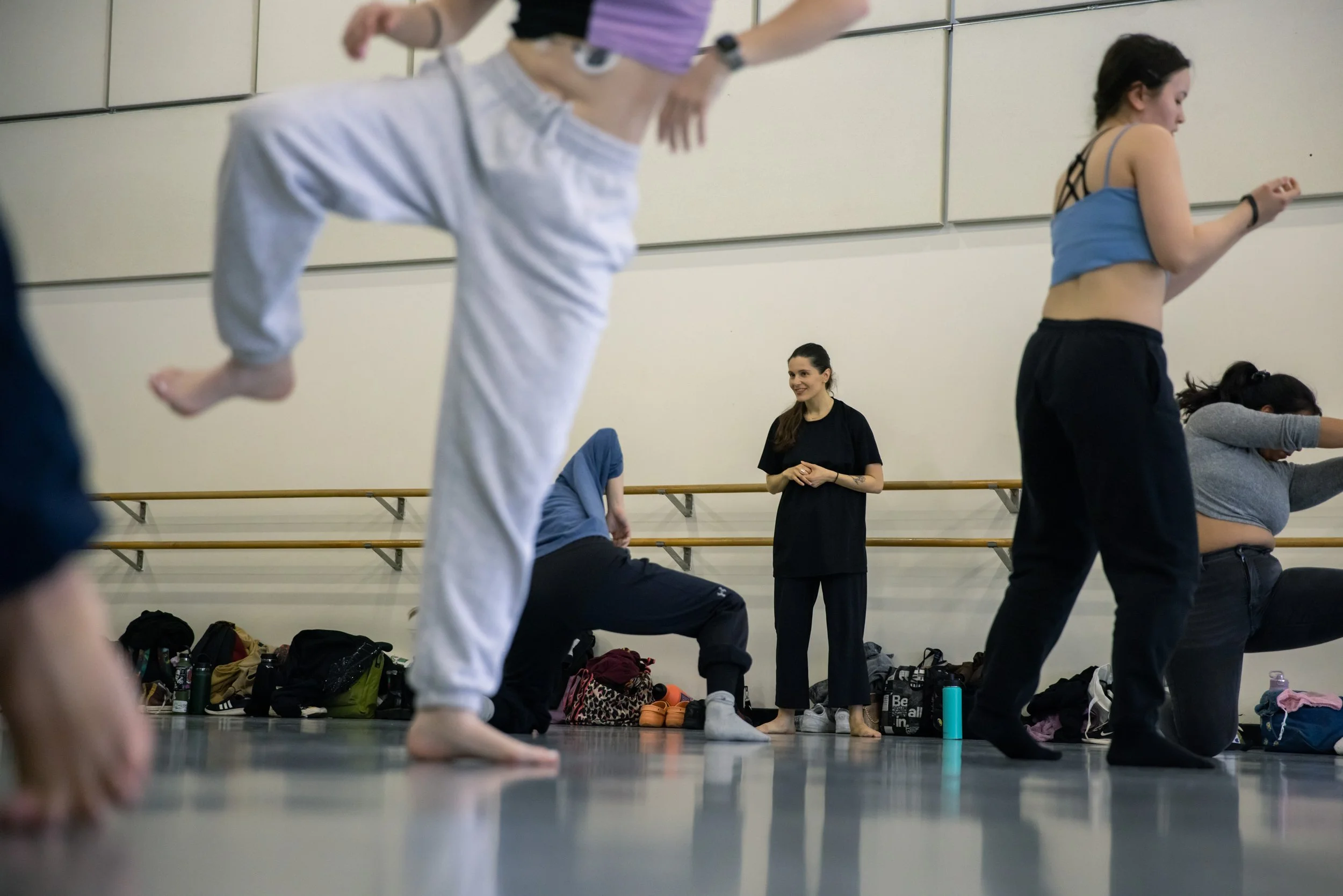
Photography by Skye Varga.